Welcome to Our Company





 Send Inquiry
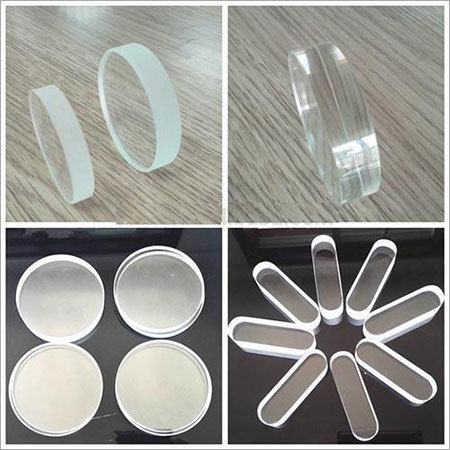
Borosilicate View Glass
2000 INR/Piece
Product Details:
- Heat Resistance Yes
- Color Clear
- Glass Type Borosilicate
- Glass Thickness 2 mm to 20 mm
- Glass Technique Moulded/Annealed
- Glass Size As per Customer Requirements
- Material Borosilicate Glass
- Click to View more
X
Borosilicate View Glass Price And Quantity
- 2000 INR/Piece
- 10 Piece
Borosilicate View Glass Product Specifications
- Yes
- Customized, Standard Sizes Available
- Borosilicate Glass
- Polished
- As per Customer Requirements
- Transparent Monitoring
- Industrial
- Moulded/Annealed
- View Glass
- Borosilicate
- Chemical, Pharmaceutical, Laboratory, Industrial Sight Glass Applications
- 2 mm to 20 mm
- Clear
- Round, Rectangular or Custom
- High Transparency
- Up to 25 Bar
- DIN 7080 / ASTM E438
- -20C to +400C
- Flange Mounted
- Reactors, Storage Tanks, Sight Flow Indicators, Laboratory Vessels
- Ground and Polished
- Excellent against Acids, Alkalis, and Solvents
Borosilicate View Glass Trade Information
- 100 Piece Per Week
- 10 Days
Product Description
Borosilicate View Glass is highly perfect for laboratory equipment and specialist uses, this is because they are exceptional strong and able to withstand high temperatures. It has exceptional durability as well as excellent resistance to chemical changes. This is used in the chemistry labs as well as industrial settings. Borosilicate View Glass is applicable for kitchenware as well as premium glasses. This is of superior quality and is appreciable for its versatility and physical attributes.
Specification
| Application | Chemical Laboratory, Industrial |
| Thickness | 4-60mm |
| Shape | Round |
| Color | Transparent |
| Material | Glass |
Superior Pressure and Chemical Resistance
Designed to withstand internal pressures up to 25 bar, this borosilicate view glass delivers exceptional durability in environments with aggressive chemicals. The materials resistance to acids, alkalis, and solvents ensures long-term integrity, even under the most challenging operating conditions found in chemical, pharmaceutical, and laboratory settings.
Versatile Applications and Customization
This transparent view glass is suitable for various installations, including reactors, storage tanks, laboratory vessels, and sight flow indicators. Available in multiple shapes and sizes, including custom options, it fits a range of industrial requirements. Both standard sizes and tailor-made selections ensure seamless integration into new or existing setups.
High Transparency and Heat Tolerance
Engineered for clear process monitoring, this polished glass offers high light transmission for unobstructed visual inspection. With a working temperature range from -20C to +400C, it remains stable under thermal cycling, making it ideal for industries requiring reliable, real-time monitoring under fluctuating temperature conditions.
FAQs of Borosilicate View Glass:
Q: How is borosilicate view glass installed in industrial equipment?
A: Borosilicate view glass is typically flange mounted using compatible gaskets and fittings to ensure a proper seal. This installation method allows for secure integration into reactors, storage tanks, or sight flow indicators, facilitating safe and reliable operation in industrial settings.Q: What benefits does borosilicate view glass offer in chemical processing applications?
A: Due to its high resistance to acids, alkalis, and solvents as well as the ability to withstand temperatures up to 400C and pressures up to 25 bar, borosilicate view glass enables safe, long-term process observation and reduces the risk of corrosion or glass failure.Q: When should borosilicate view glass be used instead of standard glass?
A: Borosilicate view glass should be chosen when applications demand high transparency combined with resistance to chemical aggression, significant pressure, and temperature fluctuations. It is particularly effective in chemical, pharmaceutical, and laboratory environments where these conditions are common.Q: Where can borosilicate view glass be applied within a facility?
A: It can be used in a wide range of equipment, including reactors, laboratory vessels, storage tanks, sight flow indicators, and any process where visual monitoring through a durable, clear window is required.Q: What shapes and sizes are available for borosilicate view glass?
A: The glass comes in round, rectangular, and custom shapes, with sizes and thicknesses ranging from 2 mm to 20 mm. Customers can select from standard sizes or request custom dimensions to meet specific design needs.Q: How does the manufacturing process ensure the quality of the view glass?
A: Borosilicate view glass is manufactured using moulded or annealed techniques, followed by edge grinding and polishing. This process enhances strength, transparency, and dimensional accuracy, conforming to industry standards such as DIN 7080 and ASTM E438 for safety and reliability.Q: What advantages does high transparency provide in sight glass applications?
A: High transparency allows operators to visually inspect processes in real-time, ensuring quick detection of flow, clarity, or product quality changes. This capability significantly improves monitoring effectiveness and operational safety in industrial applications.Tell us about your requirement

Price:
Quantity
Select Unit
- 50
- 100
- 200
- 250
- 500
- 1000+
Additional detail
Mobile number
Email

Other Products in 'Transparent Glass' category



Contact Details

- 705/9, Road no B-33, Gidc Estate, Phase-4, Vitthal Udyognagar, Dist:Anand - 388121, Gujarat, India
- Phone : 08045801882
SHREE UMIYA GLASS WORKS
GST : 24AEQFS8636C1ZQ
GST : 24AEQFS8636C1ZQ

- Mr. Dipak P Patel (Director)
- Mobile : 08045801882
- ptpatel_05@yahoo.co.in
-



SHREE UMIYA GLASS WORKS
All Rights Reserved.(Terms of Use)
Developed and Managed by Infocom Network Private Limited.
Developed and Managed by Infocom Network Private Limited.

